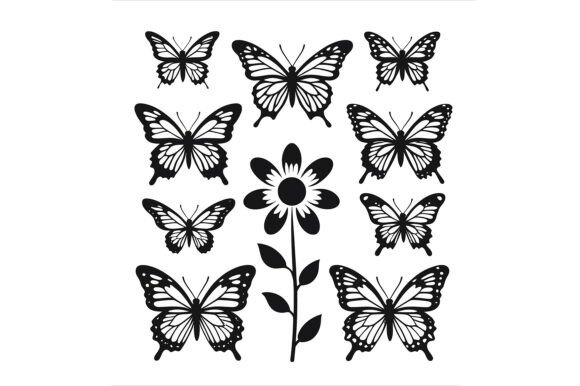
Vector Art of Butterflies and Flower: A Flexible Design Resource for Creative Projects
Vector Art of Butterflies and Flower is a digital illustration format that offers both visual appeal and technical adaptability. This type of design is commonly used in graphic design workflows where scalability, customization, and high-quality output are essential. The file typically includes an EPS (Encapsulated PostScript) version, which allows for full editing in vector-based software such as Adobe Illustrator or Inkscape. Alongside it, a high-resolution JPEG file is often provided for immediate use in projects that don’t require modification.
What Makes Vector Art of Butterflies and Flower Unique?
Unlike standard raster images such as PNG or JPEG files that lose clarity when enlarged, vector graphics maintain sharpness at any size. This is because vector art uses mathematical formulas to define shapes and lines, rather than fixed pixels. The Vector Art of Butterflies and Flower leverages this advantage, making it suitable for both intricate small-scale designs like stickers and large-format prints like posters or wall art.
Additionally, the editable nature of the EPS file gives users the ability to change colors, adjust individual elements, and integrate the design seamlessly into existing layouts. This level of control is especially valuable for designers working on branding materials, custom apparel, or personalized crafts.
Comparing Vector Art of Butterflies and Flower with Other Design Formats
When evaluating design resources, creators often consider formats such as raster images, SVG (Scalable Vector Graphics), and proprietary design files like AI (Adobe Illustrator). Each has its strengths and limitations:
- Raster images (JPEG, PNG): These are ideal for quick use and web display but lack scalability and editability. They are best for static visuals that won’t require resizing or color changes.
- SVG files: Like EPS, SVGs are vector-based and scalable. However, they are more web-friendly and supported by modern browsers, making them better suited for icons or interactive web graphics. EPS files, on the other hand, are more commonly used in print and professional design workflows.
- AI or PSD files: These offer advanced editing features but require specific software and may not be as universally compatible as EPS or JPEG files.
Vector Art of Butterflies and Flower strikes a balance by offering both a universally compatible JPEG and a fully editable EPS file, making it a versatile choice for a wide audience, including hobbyists and professionals.
Strengths and Limitations of Vector Art of Butterflies and Flower
The primary strength of this format lies in its flexibility. Designers can scale the illustration infinitely without degradation, edit individual components, and match brand colors precisely. This makes it a strong candidate for print-on-demand services, where variations in size and color may be needed for different products like mugs, t-shirts, or greeting cards.
However, there are tradeoffs to consider. Editing vector files requires compatible software, which may be a barrier for users unfamiliar with design tools. Additionally, while the JPEG version is easy to use, it lacks the adaptability of the vector format. For projects that only need a static image, a high-quality PNG or JPEG from a general stock image site might suffice without the added complexity of vector editing.
When Vector Art of Butterflies and Flower Is the Right Choice
This design format is particularly well-suited for:
- Crafting and DIY projects where personalization and color matching are important.
- Print-on-demand products requiring different sizes and color variations, such as t-shirts, stickers, and home decor items.
- Educational materials where clarity and scalability help in illustrating biological details of butterflies and flowers.
- Branding and marketing when integrated into logos, social media assets, or promotional materials that need consistent quality across formats.
If your project involves frequent resizing, color customization, or integration into layered designs, Vector Art of Butterflies and Flower offers significant advantages over static image formats.
When You Might Consider Alternatives
There are scenarios where other formats or design approaches may be more appropriate. For instance:
- If you need a design for a website or app interface, SVG files might offer better compatibility and responsiveness.
- For simple social media graphics or blog images, high-resolution JPEG or PNG files from a stock image library may be sufficient and more convenient.
- In cases where detailed customization isn’t needed, pre-designed templates with embedded graphics can save time compared to working with raw vector files.
Understanding the specific needs of your project—such as required file types, editing capabilities, and intended use—will help determine whether Vector Art of Butterflies and Flower is the most suitable option.
Practical Use Cases and Examples
Let’s look at a few real-world examples where this type of vector art proves valuable:
- Custom T-shirt Design: A small business owner uses the EPS file to resize the butterfly and flower illustration to fit different shirt styles and colors, ensuring crisp prints every time.
- Wedding Invitations: A designer adjusts the color palette of the vector illustration to match the wedding theme and integrates it into a layered invitation layout.
- Classroom Posters: An educator prints a large poster using the vector file to display detailed anatomy of butterflies and flower structures without any loss of quality.
- Sticker Creation: A digital artist edits individual elements of the illustration to create multiple sticker variations for an online shop, all derived from a single source file.
These examples highlight how the flexibility of Vector Art of Butterflies and Flower supports a range of creative and commercial applications.
Final Considerations for Choosing Vector Art
Ultimately, the decision to use Vector Art of Butterflies and Flower depends on your project’s requirements and your familiarity with design tools. If you value scalability, customization, and professional-grade output, this format is a strong contender. However, if your needs are minimal or you lack access to vector editing software, simpler formats may be more practical.
By evaluating your intended use, editing capabilities, and output quality expectations, you can make an informed choice that aligns with both your creative goals and technical resources.